

Written by Spiro Koulouris | Medically Reviewed by Dr. Muhammad Qousain Ali, Consultant Rheumatologist on April 13, 2026
Colchicina para los ataques de gota
La colchicina es un medicamento recetado (nombre de marca: Colcrys) que trata la gota y se extrae de plantas del género Cólquico, a toxic plant which, if over ingested, can be life threatening and requires urgent medical attention. It has been around for about 2000 years as an effective gout treatment and its’ modern use in tablet form began in 1936. Benjamin Franklin suffered from gout and known to have brought Cólquico plantas de Europa.
¿Cómo funciona la colchicina?
Colchicine does not lower uric acid levels but works to block the inflammation caused by uric acid crystals, to relieve you of the pain, working very fast usually within 24 hours when taken early in case of an attack, slowing the inflammation. Whenever I get a gout attack, it is my go-to drug, rushing to the doctor’s office to get a prescription and take about 3-4 a day for the first 2 days, then about 2 daily for another 2 days after that.
It’s the quick-fix miracle drug for us gout sufferers, that’s for sure! Supposedly, it doesn’t work for everyone but it does have a good pain reduction success rate, over 50% and colchicine should be taken within 12-24 hoursof an attack to work most effectively. Make sure to drink 12 to 15 glasses of 8oz of water daily when taking colchicine making the drug work more effectively for you. Colchicine is usually taken in combination with other gout medications to help manage the symptoms.
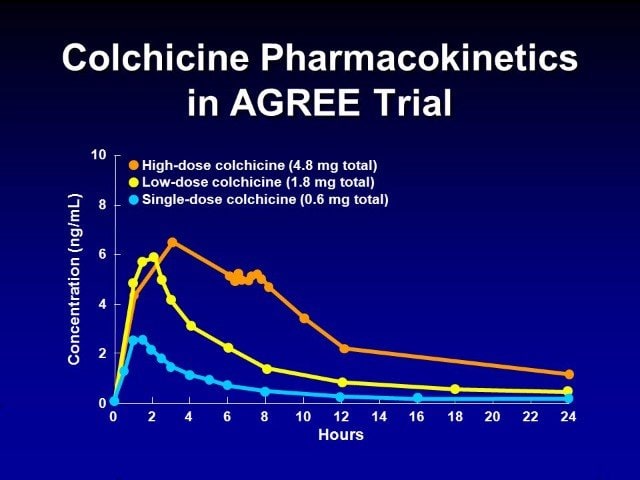
The important part about taking colchicine is getting the dosage right, people have died from overdoses. The FDA recommended use is to take 1.2mg followed by 0.6mg one hour later is enough for a day totalling 1.8mg during a gout attack and to prevent gout attacks it is recommended to take 0.6mg once or twice a day for anyone older than 16 years old with a maximum dosage of 1.2mg a day. Rheumatologists now advise low-dose colchicine commonly for short-term prophylaxis (in some cases, up to 6 months) during initiation of urate-lowering therapy to prevent flares. I personally stop it once my big toe pain subsides enough that I can tolerate the pain of walking which is usually 4-5 days.
Es importante ser consistente al tomar la colchicina a tiempo según lo recetado por tu médico. Si omites una dosis o no la tomas según lo programado, es posible que el medicamento no funcione tan bien e incluso pueda dejar de funcionar.
Si olvidas una dosis, tómala de inmediato. Si faltan solo unas pocas horas para la próxima dosis de colchicina, simplemente considera la dosis anterior y la siguiente como una sola dosis. No intentes compensar la dosis omitida tomando dos dosis juntas, ya que esto puede provocar efectos secundarios graves.
You’ll know the drug is working because you feel less pain in your affected joint. You should also experience less gout flares after taking colchicine as a short-term or long-term prophylaxis.
¿Cuáles son los efectos secundarios?
If you’re an elderly patient or suffer from kidney disease, liver disease, bone marrow disorders, inflammatory bowel disease or a low white blood cell count, you should not take colchicine without a doctor’s prescription. Your doctor might adjust its dose for you or even stop it altogether.
The side effects that I have personally experienced are usually diarrhea, going to the bathroom every few hours and stomach cramps on the days I take 3-4 right after an attack. Other side effects include vomiting and nausea. It is very important to pay attention on how colchicine affects you personally. Remember, colchicine is meant for acute attacks and short-term prophylaxis whereas allopurinol is a better drug for long term treatment of gout.
Also allopurinol should be slowly introduced after a gout attack because in the beginning it may also trigger a gout attack. Remember colchicine stops an attack in its’ tracks while allopurinol works to reduce the uric acid levels in your body. Colchicine is for limited use while allopurinol is for long term use.
En enero de 2015, Takeda Pharmaceuticals USA, el fabricante de colchicina vendida como Colcrys para los ataques agudos de gota, anunció que pronto se lanzaría una versión genérica al mercado, pero no especificó el nuevo precio. Actualmente, la marca Colcrys se vende por aproximadamente $6 por pastilla. Ha habido mucha controversia desde que el producto fue aprobado por la FDA en 2009, ya que se ordenó la salida del mercado de las versiones genéricas y hubo un monopolio del medicamento, lo que explicaba el alto costo de la pastilla. Esta es una buena noticia para los que sufren de gota, ya que ahora podrán permitirse la colchicina a un precio más bajo y asequible.
La colchicina ahora también está disponible en forma de cápsula, tanto en versión genérica como de marca. El nombre de marca para la colchicina en cápsulas es Mitigare. No todas las farmacias venden colchicina, así que asegúrese de llamar con anticipación para averiguarlo.
Furthermore, on February 2019, it was announced that the FDA approved the first oral solution on colchicine for the treatment of gout flares. So now you can take colchicine orally for those elderly gout sufferers who have difficulty swallowing capsule or tablet drugs.
Un estudio 2020 publicado en Investigación y terapia de la artritis found that colchicine treatment may elevate the risk of having more diarrhea and other gastrointestinal issues but rarely any liver, muscle, sensory, infections, hematological issues or death according to their results.
La colchicina también puede provocar una disminución de las células sanguíneas en el cuerpo. Esto es bastante arriesgado, ya que ciertos tipos de células sanguíneas son responsables de combatir infecciones y formar coágulos sanguíneos. Si tienes un trastorno de la sangre, podría ser difícil deshacerte de una infección o sanar una herida.
Another side effect of colchicine is rhabdomyolysis or muscle damage. If taken for longer durations or at higher doses, it may damage your muscles and also your kidneys especially if you’re of senior age. If you’re already taking other medications alongside colchicine, this makes it even riskier. Make sure you speak with your doctor so they can prescribe a safer regimen for you.
Interacciones con la drogas
Aside from colchicine, you should also be careful about the drugs that you take with it. Certain medicines don’t interact well with colchicine and increase its toxicity. Here are just some of them:
- Medicamentos contra el VIH, incluidos atazanavir, indinavir, saquinavir, nelfinavir y ritonavir.
- Medicamentos antifúngicos como el ketoconazol y el itraconazol.
- Antibióticos como el telitromicina y la claritromicina.
- Antidepresivos como la nefazodona.
- Medicamentos antiarrítmicos como la digoxina.
- Medicamentos para el colesterol como fluvastatina, pravastatina, lovastatina, atorvastatina, fibratos, simvastatina y gemfibrozilo.
- Medicamentos para el corazón como diltiazem y verapamilo.
Estos medicamentos, cuando se toman junto con colchicina, aumentarán los niveles de colchicina en tu cuerpo, lo que puede llevar a daño muscular. Algunos de ellos, como los medicamentos para el corazón, pueden causar estreñimiento, diarrea, náuseas y vómitos.
If you are currently taking any of the medications mentioned above, your doctor will reduce your colchicine dosage or hold it for a while so as to avoid these side effects.
Para asegurarse de que estás tomando la cantidad adecuada de colchicina, es posible que tu médico revise tu conteo sanguíneo, así como la función de tu hígado y músculos. Estas son las áreas de tu cuerpo más afectadas por una sobredosis de colchicina, por lo que si no están funcionando correctamente, se debería reducir tu dosis.
Interacciones alimentarias
There is a specific fruit to avoid when you’re on colchicine and that is grapefruit. This is because grapefruit causes the body to process colchicine less efficiently, thus increasing colchicine levels and risk of toxicity.Avoid consuming grapefruit or its juice when you’re on this medication.
In conclusion, a new gout drug is under development called Arcalyst (Rilonacept), works differently than colchicine but serves the same role colchicine offers for the gout sufferer but supposedly with fewer side effects than colchicine. Make sure to also tell your doctor about any other medications you may be taking that may not mix too well with colchicine and create havoc for your health. What have been your experiences with colchicine, I’d like to hear them?
AVISO LEGAL
This article is for educational purposes only and should not replace medical advice. Patients should consult their physician for individual management.




 Spanish
  English
  French
  German