

Written by Spiro Koulouris | Medically Reviewed by Dr. Muhammad Qousain Ali, Consultant Rheumatologist on April 13, 2026
Colchicin für Gichtanfälle
Colchicin ist ein verschreibungspflichtiges Medikament (Markenname: Colcrys) zur Behandlung von Gicht, das aus Pflanzen der Gattung Colchicum, a toxic plant which, if over ingested, can be life threatening and requires urgent medical attention. It has been around for about 2000 years as an effective gout treatment and its’ modern use in tablet form began in 1936. Benjamin Franklin suffered from gout and known to have brought Colchicum Pflanzen aus Europa.
Wie wirkt Colchicin?
Colchicine does not lower uric acid levels but works to block the inflammation caused by uric acid crystals, to relieve you of the pain, working very fast usually within 24 hours when taken early in case of an attack, slowing the inflammation. Whenever I get a gout attack, it is my go-to drug, rushing to the doctor’s office to get a prescription and take about 3-4 a day for the first 2 days, then about 2 daily for another 2 days after that.
It’s the quick-fix miracle drug for us gout sufferers, that’s for sure! Supposedly, it doesn’t work for everyone but it does have a good pain reduction success rate, over 50% and colchicine should be taken within 12-24 hoursof an attack to work most effectively. Make sure to drink 12 to 15 glasses of 8oz of water daily when taking colchicine making the drug work more effectively for you. Colchicine is usually taken in combination with other gout medications to help manage the symptoms.
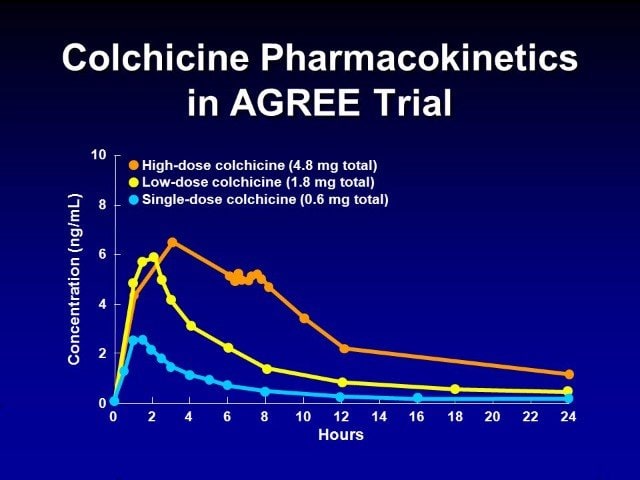
The important part about taking colchicine is getting the dosage right, people have died from overdoses. The FDA recommended use is to take 1.2mg followed by 0.6mg one hour later is enough for a day totalling 1.8mg during a gout attack and to prevent gout attacks it is recommended to take 0.6mg once or twice a day for anyone older than 16 years old with a maximum dosage of 1.2mg a day. Rheumatologists now advise low-dose colchicine commonly for short-term prophylaxis (in some cases, up to 6 months) during initiation of urate-lowering therapy to prevent flares. I personally stop it once my big toe pain subsides enough that I can tolerate the pain of walking which is usually 4-5 days.
Sie sollten Colchicin immer pünktlich einnehmen, wie Ihr Arzt es Ihnen verschrieben hat. Wenn Sie eine Dosis auslassen oder die Einnahme nicht planmäßig vornehmen, kann das Medikament nicht mehr so gut wirken. Es kann sogar aufhören zu wirken.
Wenn Sie eine Dosis vergessen haben, nehmen Sie sie sofort ein. Wenn es nur noch ein paar Stunden bis zur nächsten Einnahme von Colchicin sind, zählen Sie die vorherige und die nächste Dosis als eine einzige. Versuchen Sie nicht, die vergessene Dosis durch die Einnahme von zwei Dosen auszugleichen, da dies zu schweren Nebenwirkungen führen kann.
You’ll know the drug is working because you feel less pain in your affected joint. You should also experience less gout flares after taking colchicine as a short-term or long-term prophylaxis.
Was sind die Nebenwirkungen?
If you’re an elderly patient or suffer from kidney disease, liver disease, bone marrow disorders, inflammatory bowel disease or a low white blood cell count, you should not take colchicine without a doctor’s prescription. Your doctor might adjust its dose for you or even stop it altogether.
The side effects that I have personally experienced are usually diarrhea, going to the bathroom every few hours and stomach cramps on the days I take 3-4 right after an attack. Other side effects include vomiting and nausea. It is very important to pay attention on how colchicine affects you personally. Remember, colchicine is meant for acute attacks and short-term prophylaxis whereas allopurinol is a better drug for long term treatment of gout.
Also allopurinol should be slowly introduced after a gout attack because in the beginning it may also trigger a gout attack. Remember colchicine stops an attack in its’ tracks while allopurinol works to reduce the uric acid levels in your body. Colchicine is for limited use while allopurinol is for long term use.
Im Januar 2015 kündigte Takeda Pharmaceuticals USA, der Hersteller von Colchicin, das unter dem Namen Colcrys für akute Gichtanfälle verkauft wird, an, dass in Kürze eine generische Version auf den Markt kommen wird, machte aber keine Angaben zum neuen Preis. Gegenwärtig kostet das Markenmedikament Colcrys etwa $6 pro Pille. Seit das Produkt 2009 von der FDA zugelassen wurde, gab es viele Kontroversen, da generische Versionen vom Markt genommen wurden und ein Monopol auf das Medikament bestand, was die hohen Kosten der Pille erklärte. Dies ist eine gute Nachricht für Gichtkranke, die sich nun Colchicin zu einem niedrigeren und erschwinglicheren Preis leisten können.
Colchicin ist jetzt auch in Kapselform erhältlich, sowohl als Generikum als auch als Markenpräparat. Der Markenname für eine Kapsel Colchicin ist Mitigare. Nicht alle Apotheken verkaufen Colchicin, so stellen Sie sicher, dass vor der Zeit zu rufen, um herauszufinden.
Furthermore, on February 2019, it was announced that the FDA approved the first oral solution on colchicine for the treatment of gout flares. So now you can take colchicine orally for those elderly gout sufferers who have difficulty swallowing capsule or tablet drugs.
A Studie 2020 veröffentlicht in Arthritisforschung und -therapie found that colchicine treatment may elevate the risk of having more diarrhea and other gastrointestinal issues but rarely any liver, muscle, sensory, infections, hematological issues or death according to their results.
Colchicin kann auch zu einer Verringerung der Blutzellen im Körper führen. Dies ist ziemlich riskant, da bestimmte Arten von Blutzellen für die Bekämpfung von Infektionen und die Bildung von Blutgerinnseln verantwortlich sind. Wenn Sie eine Blutstörung haben, kann es schwierig sein, eine Infektion zu beseitigen oder eine Wunde zu heilen.
Another side effect of colchicine is rhabdomyolysis or muscle damage. If taken for longer durations or at higher doses, it may damage your muscles and also your kidneys especially if you’re of senior age. If you’re already taking other medications alongside colchicine, this makes it even riskier. Make sure you speak with your doctor so they can prescribe a safer regimen for you.
Wechselwirkungen mit Medikamenten
Aside from colchicine, you should also be careful about the drugs that you take with it. Certain medicines don’t interact well with colchicine and increase its toxicity. Here are just some of them:
- HIV-Medikamente einschließlich Atazanavir, Indinavir, Saquinavir, Nelfinavir und Ritonavir.
- Antimykotika wie Ketoconazol und Itraconazol.
- Antibiotika wie Telithromycin und Clarithromycin
- Antidepressiva wie Nefazodon
- Antiarrhythmika wie z. B. Digoxin
- Cholesterinmedikamente wie Fluvastatin, Pravastatin, Lovastatin, Atorvastatin, Fibrate, Simvastatin und Gemfibrozil
- Herzmedikamente wie Diltiazem und Verapamil
Diese Medikamente, wenn sie zusammen mit Colchicin eingenommen werden, erhöhen den Colchicinspiegel in Ihrem Körper und führen zu Muskelschäden. Einige von ihnen, wie die Herzmedikamente, können Verstopfung, Durchfall, Übelkeit und Erbrechen verursachen.
If you are currently taking any of the medications mentioned above, your doctor will reduce your colchicine dosage or hold it for a while so as to avoid these side effects.
Um sicherzustellen, dass Sie genau die richtige Menge an Colchicin einnehmen, wird Ihr Arzt möglicherweise Ihr Blutbild sowie Ihre Leber- und Muskelfunktion überprüfen. Dies sind die Bereiche Ihres Körpers, die am meisten von einer Colchicin-Überdosis betroffen sind. Wenn diese Bereiche nicht richtig funktionieren, sollte Ihre Dosis reduziert werden.
Wechselwirkungen mit Lebensmitteln
There is a specific fruit to avoid when you’re on colchicine and that is grapefruit. This is because grapefruit causes the body to process colchicine less efficiently, thus increasing colchicine levels and risk of toxicity.Avoid consuming grapefruit or its juice when you’re on this medication.
In conclusion, a new gout drug is under development called Arcalyst (Rilonacept), works differently than colchicine but serves the same role colchicine offers for the gout sufferer but supposedly with fewer side effects than colchicine. Make sure to also tell your doctor about any other medications you may be taking that may not mix too well with colchicine and create havoc for your health. What have been your experiences with colchicine, I’d like to hear them?
HAFTUNGSAUSSCHLUSS
This article is for educational purposes only and should not replace medical advice. Patients should consult their physician for individual management.




 German
  English
  French
  Spanish